彦十蒔絵の作品「乾漆変塗風化瓜型鉄瓶」が、ヴィクトリア&アルバート博物館(英国)に収蔵されました。
Hikoju Makie’s work —Urushi kettle, simulating a cast-iron kettle— entered the permanent collection of the Victoria and Albert Museum, London.
展覧会:Urushi Now — Contemporary Japanese Lacquer
今回の収蔵の機会となったのは、V&Aが企画した展覧会「Urushi Now: Contemporary Japanese Lacquer」。現代の日本漆芸を世界に問う展覧会として企画されました。展示期間は、2026年4月30日から約1年間を予定しています。
The work was acquired for the collection on the occasion of Urushi Now: Contemporary Japanese Lacquer, an exhibition curated by the V&A to present the vitality of contemporary Japanese urushi to an international audience. The work is on display from 30 April 2026 for approximately one year.
V&Aの展示テキストには、こう記されています。
『彦十蒔絵は、漆が持つ『楽しさ』の可能性を世に知らしめることに生涯を捧げた若宮隆志(1964–2025)によって、2004年に輪島で設立された現代漆芸工房です。
職人一人ひとりが漆器制作の各工程におけるスペシャリストでありながら、江戸時代の絵師・小川破笠(1663–1747)を彷彿とさせるような、自由で機知に富んだ『遊び心』を共有しています。
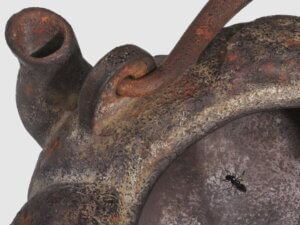
本作は、右側に展示されている鉄瓶のフォルムをモデルに、漆を用いてその『錆びた質感』までも再現した作品です。』
The museum’s exhibition text reads:
“Hikoju Makie is a contemporary urushi studio founded in Wajima in 2004 by Wakamiya Takashi (1964–2025), who devoted his life to revealing the joyful possibilities of urushi. Every member specialises in a different stage of lacquerware production, united by a playful spirit reminiscent of Ogawa Haritsu (1663–1747). They produced this ‘rusted’ kettle in urushi, modelled on the form of the cast-iron kettle to the right.”
—
作品:乾漆変塗風化瓜型鉄瓶 / Work: Urushi kettle, simulating a cast-iron kettle
素材は、漆。金・錫・炭・土の粉末を用いた多彩な漆塗りが、乾漆と木を芯材として施されています。輪島・金沢(石川県)での制作。収蔵番号:FE.1-2026。
The work is constructed from polychrome urushi with gold, tin, charcoal and clay powders on a dry-lacquer and wood core. Made in Wajima and Kanazawa, Ishikawa Prefecture. Museum no. FE.1-2026.
見立て / Mitate
この作品の起点は、V&Aの収蔵庫にある一つの鉄瓶でした。
V&Aのキュレーターとの対話の中で、構想は生まれました。そこにある鉄瓶を「見立てる」こと——それが、この作品の核心にあるコンセプトです。
This work begins with a single cast-iron kettle already in the V&A’s collection.*
The concept took shape through a sustained exchange with the V&A’s curators: to produce a work of mitate — perceiving and rendering one thing through the language of another — using the museum’s own kettle as its subject.
漆は、時間を止める / Urushi stops time
漆という素材には、時間を封じ込める力があります。そこから、一つの問いが生まれました。「ならば、時間をもっと進めることもできるのではないか」
Urushi has the capacity to arrest time — to fix a moment within its hardened surface. From this quality, a question emerged: if urushi can stop time, can it also advance it?
鉄瓶は、使われるほどに錆びていきます。その変化が、鉄という素材の歴史を物語る。彦十蒔絵は、実際の鉄瓶よりもさらに深く、より長い時間の蓄積を纏わせることを選びました。目の前にある本物の鉄瓶よりも、時間の重さを纏った漆の鉄瓶として。
Cast iron darkens and corrodes with use — each surface tells a history of time. Hikoju Makie chose to render the kettle not as it is, but as it might become: deeper in rust, heavier with age than the iron original beside it.
制作の過程 / Process
V&Aのご協力のもと、収蔵品の鉄瓶を3Dプリンターで模型化し、その形状を元型として乾漆技法で制作されました。
With the cooperation of the V&A, the original kettle in the collection was reproduced as a 3D-printed form, which served as the base for the work’s construction using the kanshitsu technique.
収蔵番号(FE.1-2026)は、蓋の裏に沈金で施されています。硬化した漆の表面に細い線を彫り込み、金粉を擦り込む——この沈金の技によって、番号が静かに刻まれています。
*The museum’s accession number — FE.1-2026 — is inscribed on the underside of the lid using chinkin, a technique in which fine lines are carved into the hardened lacquer surface and gold powder is rubbed into the grooves.*
乾漆変塗風化瓜型鉄瓶(2026, 彦十蒔絵)
Urushi kettle, simulating a cast-iron kettle, 2026 Hikoju Makie
Victoria and Albert Museum, London
Museum no. FE.1-2026